Packaging is often the part of a product launch that takes longer than expected. Thailand has a broad packaging and printing industry serving its own food, beverage, cosmetics and export manufacturers, which makes it a practical source for brands that want packaging close to their production — or that already manufacture in Thailand.
What Thai packaging suppliers make
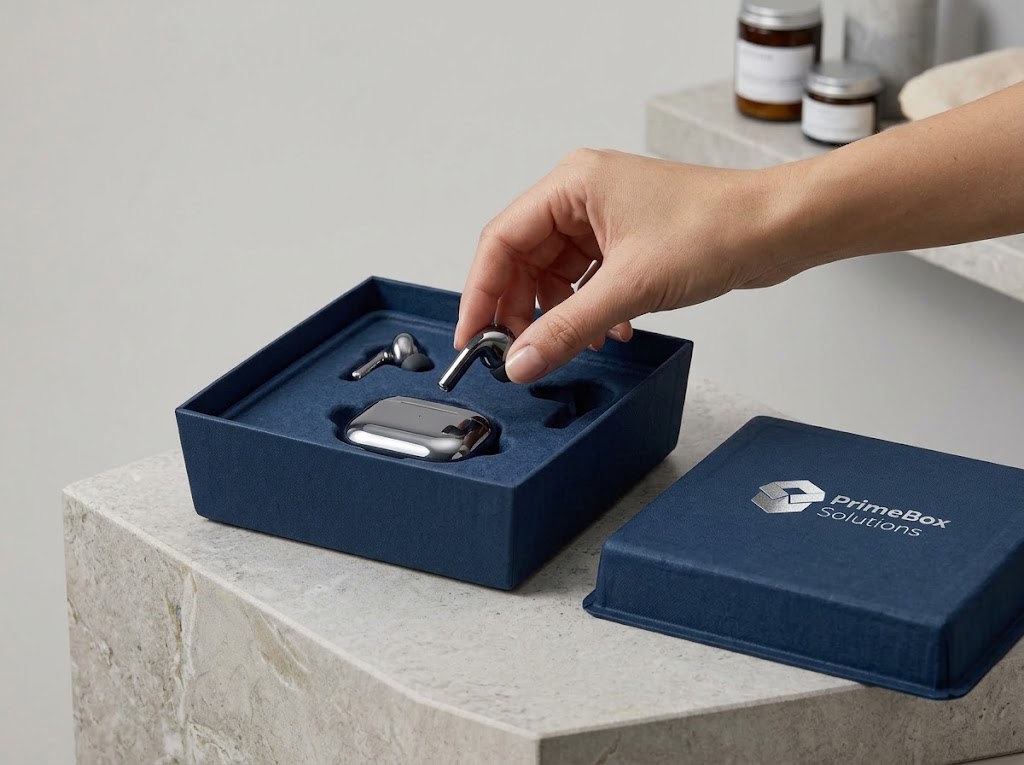
- Rigid and gift boxes — lid-and-base, drawer and magnetic boxes, with foil stamping, embossing and custom inserts.
- Folding cartons — retail boxes for cosmetics, supplements and food.
- Corrugated shipping cartons and e-commerce mailer boxes.
- Flexible packaging — stand-up pouches, zip pouches, sachets and laminated films.
- Labels and stickers, hang tags and printed tapes.
- Eco options — molded pulp (including sugarcane bagasse), kraft paper and recyclable mono-material structures.
- Metal tins, glass and plastic containers through specialised converters.
Write a packaging brief that gets accurate quotes
- Product and dimensions — what goes inside, weight and exact size, or a physical sample.
- Structure — box style, closure, insert, window, handle; send a reference photo if you have one.
- Material — board grade or thickness, film structure, paper finish.
- Printing and finishing — number of colours, inside or outside print, foil, emboss, spot UV, lamination.
- Quantities — quote several quantity breaks, because unit prices change sharply with volume and printing method.
- Delivery — to a Thai factory, to the port, or exported to you (state the Incoterm).
Dielines, proofs and samples
Ask the supplier for a dieline (the flat template) before your designer finishes the artwork. Approve a digital proof for layout and a physical sample or press proof for colour and structure. Colours can look different on screen, on coated board and on kraft paper, so agree on colour references (for example Pantone codes) in writing.
Food-contact and market rules
If the packaging touches food, cosmetics or supplements, ask which materials and inks are suitable for that use and which test reports the supplier can provide. Requirements depend on the destination: the EU, the US and many Asian markets have their own food-contact rules, and labelling requirements (ingredients, recycling marks, language) apply to the printed artwork. Your brand is usually responsible for the label content, so check it with your importer.
Questions to ask
- Which processes do you run in-house and which are outsourced?
- Can you produce a sample before mass production, and what does it cost?
- What are typical lead times for samples, first orders and repeat orders?
- How are cartons packed and palletised for export?
Find packaging suppliers
Browse packaging and printing suppliers, including paper packaging and food packaging, or post a free RFQ with your brief. If you are also developing the product itself, see our guide to Thai OEM cosmetics manufacturing.